




 Whitman Expo
-
Red Army Headquarters Currency & Banknote Values
Banknote Book® Price Guide


Sort by
Sponsor

Sponsor

Sponsor

Sponsor

Sponsor

Legal Disclaimer
The prices listed in our database are intended to be used as an indication only. Users are strongly encouraged to seek multiple sources of pricing before making a final determination of value. CDN Publishing is not responsible for typographical or database-related errors. Your use of this site indicates full acceptance of these terms.
The Red Army Headquarters series of Hungary in the World Currency contains 11 distinct entries.
With the signing in November 1940 of the Tripartite Pact, Hungary joined the World War II Axis alliance with Germany, Italy, and Japan. On 27 June 27 1941, Hungary declared war on the USSR and took part in combat on the Eastern Front. Over the next three years, however, the German leadership began to question the loyalty of the Hungarian government and, on 18 March 1944, German troops occupied Hungary in a single day in Operation Margarethe. Mikós Horthy, regent of the Kingdom of Hungary, was placed under house arrest and Döme Sztójay, a Nazi supporter, was installed as prime minister. Six months later, on 23 September 1944, with German forces being routed, the Soviet Red Army crossed the Hungarian border. Although Hungary signed an armistice with the USSR on 15 October, the Hungarian army ignored it and continued to fight against the Red Army. The Germans launched Operation Panzerfaust and, by kidnapping his son Miklós Horthy Jr., forced Horthy to abrogate the armistice, resign, and name Ferenc Szálasi as prime minister of a puppet “Government of National Unity” controlled by the Germans. Horthy was taken to Germany as a prisoner. Hungary now became a battlefield between German and Soviet forces. By 29 December, Budapest had been encircled by the Red and Romanian armies; on 20 January 1945, the Hungarian government signed an armistice with the USSR. On 13 February, the German and Hungarian units remaining in Budapest surrendered.
In the Soviet-occupied areas of Hungary, the Red Army Headquarters (RAH) issued banknotes, as it did in other areas occupied by Soviet troops during WWII (China B5801 - B5806, Korea B501 - B504). It is thought these notes may have entered circulation before the signing of the armistice, perhaps as early as late 1944 in more eastern regions. While it is unknown whether the notes were for the exclusive use of the Red Army, or whether they also circulated amongst the civilian population, it should be noted they contain no Russian text.
See More See Less


 Loading more ...
Legal Disclaimer
The prices listed in our database are intended to be used as an indication only. Users are strongly encouraged to seek multiple sources of pricing before making a final determination of value. CDN Publishing is not responsible for typographical or database-related errors. Your use of this site indicates full acceptance of these terms.
Available on Greysheet Marketplace
View All

Buy Now: $375.00

Buy Now: $925.00

Buy Now: $35,000.00

Buy Now: $825.00
Dealer Directory
View All Dealers

Elizabeth Coggan Numismatics
FEATURED


WorldBanknotes.eu
FEATURED

Rare Coins of New Hampshire
FEATURED
Greysheet News
View All News

Numismaster.com ceased operations on July 31, leaving paid digital subscribers scrambling to pursue other options for their numismatic information.

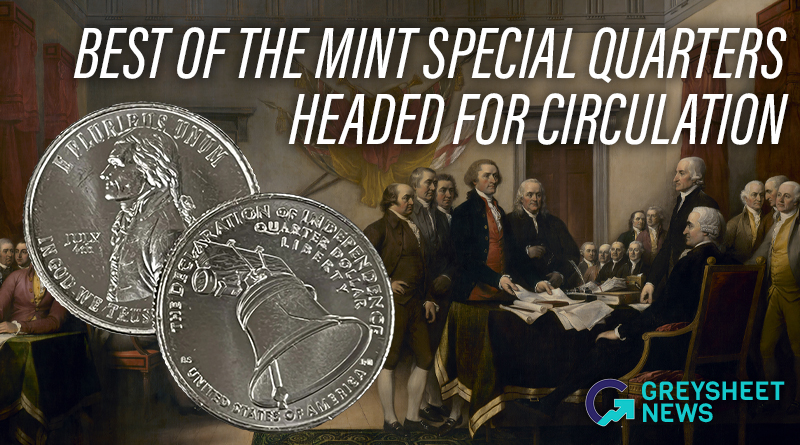
The search is on for special quarter dollars that will be placed in circulation by the United States Mint as part of the nation's Semiquincentennial celebration.
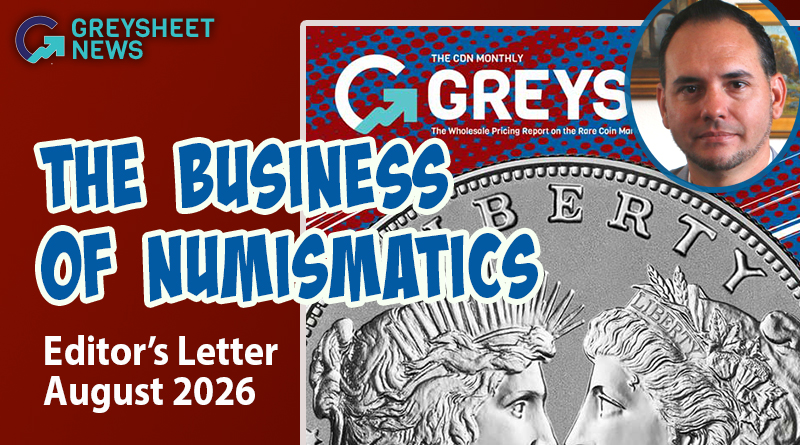
With the month of July and all the celebrations of Independence Day behind us, the rare coin market looks with anticipation to August.
Events
View All Events
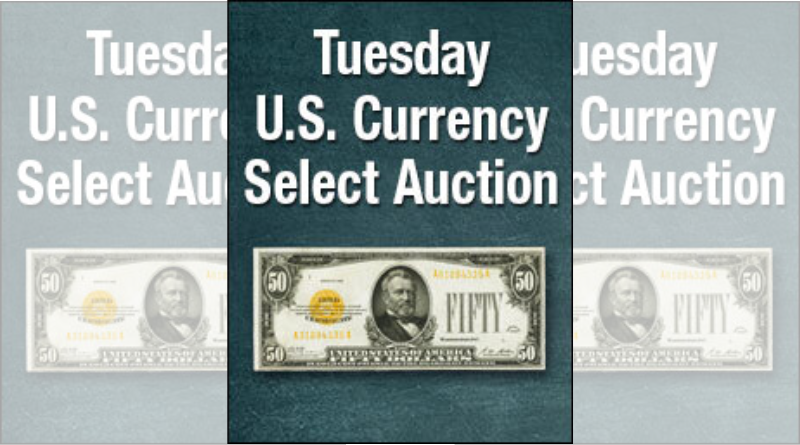

Heritage Auctions

Tuesday, June 2, 2026
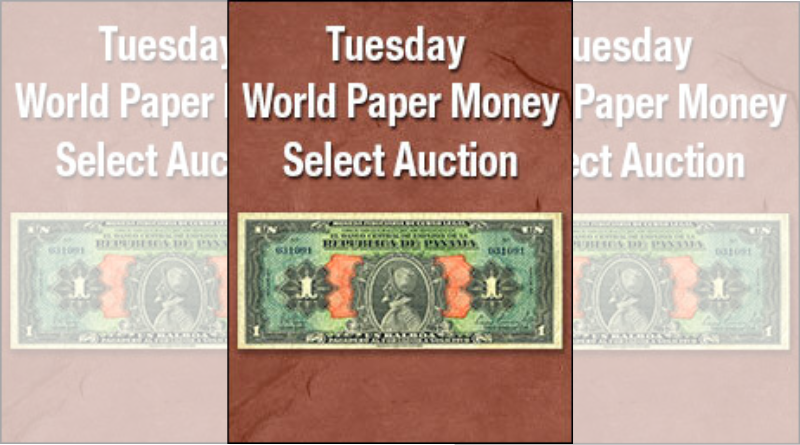
Heritage Auctions
Tuesday, June 2, 2026
Heritage Auctions
Wednesday, June 3, 2026