




 Whitman Expo
Proof Sets Through History
It is imperative that you research any Proof set before purchasing in order to determine the number of silver coins, the fineness, and the total weight of the silver content as they vary from year to year and from type of Proof set.
by Michael Garofalo |
Published on June 4, 2026

Download the Greysheet app for access to pricing, news, events and your subscriptions.
Subscribe to Greysheet for the industry's most respected pricing and to read more articles just like this.
On April 2, 1792, the United States Congress passed the Coinage Act of 1792. This legislation created the dollar as the fledgling nation’s unit of money, mandated the United States establish a minting facility, and defined, among other things, the actual denominations of this coinage that this Mint would strike.
In the Mint’s earliest days in Philadelphia, there could not have been much thought to creating a Proof coinage, as there were virtually no collectors in existence asking for superb specimens of these coins. But by the year 1821, a full Proof set of all denominations was struck, and these coins now reside in the National Numismatic Collection housed in the Smithsonian Institution.
The numbers of American coin collectors were very small at that time, but the discontinuation of both of the ‘Old Coppers’ in 1857 spurred the coin collecting hobby and collectors and dealers ordered whatever coins they wanted from the Mint.
Proof coins for collectors slowly grew as a hobby during the remainder of the 19th century as more people discovered the collecting hobby. When the "Renaissance of American coinage" started in 1907, striking Proof coins became more difficult as the fields were no longer uniformly flat. As the designs had greater depth to them, the fields were concave so that a matte Proof finish, which originated at the Paris Mint was perfected in Philadelphia. These new artistic designs posed numerous problems for the Mint and, by 1916, Proof coin production had ceased.
During the 1920s, coin collecting grew and, as the 1930s arrived, coin collecting became a very popular hobby. On April 28, 1936, Secretary of the Treasury Henry Morgenthau, Jr. authorized the Mint to strike Proof coins once again. Louis McHenry Howe, the personal secretary to President Franklin D. Roosevelt, had encouraged Morgenthau to strike Proof coins for all current circulating issues. The current denominations, the Lincoln cent, the Buffalo nickel, the Mercury dime, the Washington quarter, and the Walking Liberty half dollar were struck in Proof format and were offered to collectors in sets as well as individually. Single coin prices were $.16 for Proof cents, $.20 for Proof nickels and dimes, $.50 for quarters and $.75 for a Proof half dollar.
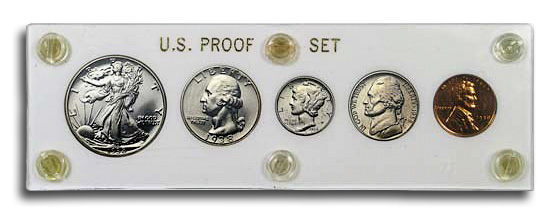
The five-piece Proof coin set was offered to collectors at $1.81, which broke down as $.91 in face value, plus surcharges for these Proof coins as $.15 each for the cent and the nickel, $.10 for the dime and $.25 each for the quarter and the half dollar.
These early Proof coins had a satiny finish and coin collectors were disappointed as they were expecting coins that would contrast nicely with the brightly mirrored fields. The Lincoln cent and the Buffalo nickel were typically satiny, which did not permit the details to display as prominently as expected.
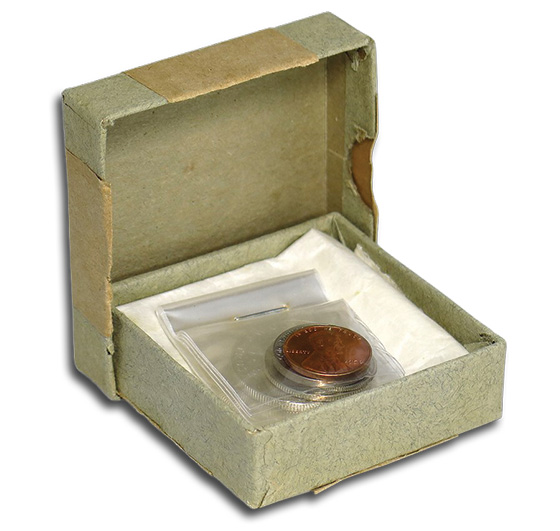
Another problem for these early Proof sets was the packaging. Each coin was placed in a brittle cellophane sleeve. While both sides of the coins were visible, the cellophane was prone to tearing. Damage to the cellophane allowed the air to interact with the coins, and it also allowed the coins to rub against one another if more than one sleeve was torn. Another significant issue was that once each of the five coins was safely in its cellophane sleeve, all five of the sleeves were attached by means of a metal staple. The staple posed several problems as it could tear the brittle cellophane, scratch loose coins, or possibly rust. None of those outcomes would be conducive to keeping these coins pristine.
A popular option for collectors of Proof sets was to carefully remove their Proof coins from the original U.S. Mint holders and place them into Capital Plastics holders. Capital Plastics holders were comprised of three pieces of acrylic plastic; the top and bottom pieces were clear while the center piece had holes exactly fitting the diameter of each of the different denominations. The three acrylic layers were held together by plastic screws and posts on each corner of the holder.
These new Proof sets were shipped to the public between 1936 and 1942. The United States Mint was supporting the war effort, and that included changing the composition of the five-cent coin. Because of this, the 1942 Proof sets have five or six coins. For the six-coin sets, both versions of nickels struck at the Philadelphia Mint were included. One nickel had the usual composition of 75% copper and 25% nickel. The special "war nickel" composition now became 56% copper, 35% silver, and 9% manganese. To make these new war nickels easy to identify, the mintmark was greatly enlarged and placed on the reverse above Monticello. Because of these constraints on the Mint, it was decided that the Mint should not accommodate collectors wanting Proof coinage. Subsequently, the striking of Proof coins was suspended after 1942 and did not resume until 1950—well beyond the end of World War II.
Proof set production was resumed in 1950, thanks to demand from collectors. Proof coins were once again shipped in cellophane sleeves, stapled together, wrapped in tissue paper, and shipped in small cardboard boxes.
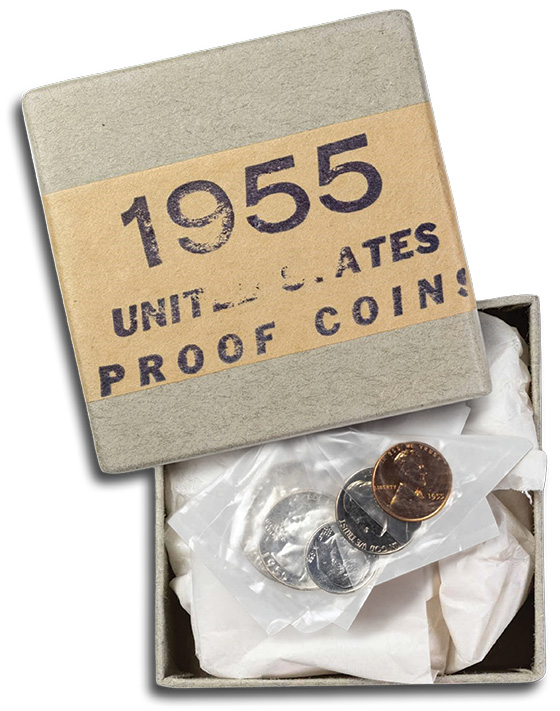
In 1955, if you ordered a Proof set early in the year, you received a set in the usual packaging. Later in the year, the sets were packaged differently. The Mint now placed these coins in clear Pliofilm and heat sealed the coins in their individual spaces in the Pliofilm sheet. They were accompanied by a descriptive sheet and mailed in a Treasury Department envelope. This is how Proof sets would be shipped and mailed through 1964.
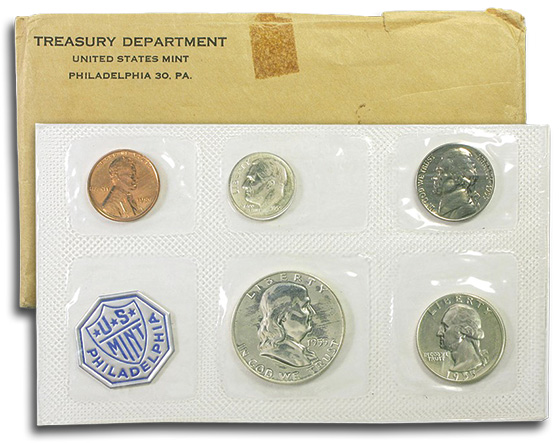
The U.S. Mint stopped using silver in circulating dimes and quarters in 1965 due to the rising price of silver. Because of that, the Coinage Act of 1965 mandated that dimes and quarters would be made of a clad composition of copper and nickel. The new 1965 Kennedy Half dollar was an exception. It was now comprised of 40% silver and that coin continued to be struck from 40% silver until 1970.
During 1965, 1966 and 1967, no actual Proof sets were struck. Instead, the Mint struck what are called Special Mint Sets. The coins in this short-lived series are not standard circulation coins, nor are they the polished Proofs. These SMS coins have a satin-like finish created by using highly polished dies and special, heavy striking pressure. The 1965 SMS set came in the same Pliofilm that was used previously. The 1966 and 1967 Special Mint Sets were instead packaged in rigid, two-piece plastic holders and stored in a navy blue cardboard box.
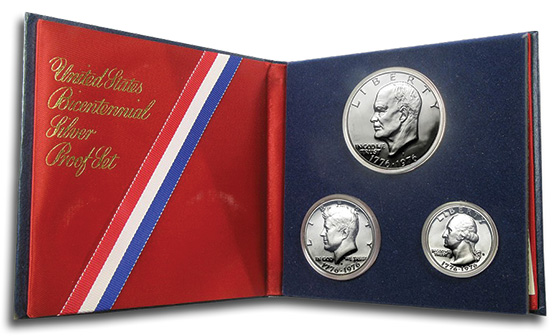
No further silver coins were placed in Proof sets between 1971 and 1975. In our Bicentennial year of 1976, the mint created a special three-coin Proof set containing a Washington quarter, a Kennedy half dollar, and an Eisenhower dollar, all struck at the San Francisco Mint and all coins contained 40% silver. These special coins were each dated 1776-1976 and these coins had specially designed reverses that commemorated the bicentennial. The coins were issued in capsules and housed in a special blue book-like holder.
From 1971 through 1991, except for the aforementioned 1976 Bicentennial set, all standard Proof sets contain clad coins. Beginning in 1992, alongside the normal clad sets, the Mint issued silver Proof sets that contained a dime, quarter, and half dollar all struck from 90% silver, until 2019. Beginning in 2019 through the present year, the composition of silver was changed from 90% to .999 fine silver. As such, these silver Proof sets now contain dimes, quarters and half dollars all struck from .999 fine silver.
Prestige Proof sets containing commemorative coins were issued from 1983 through 1997. In addition, the Mint has struck silver five-coin quarter Proof sets containing a total of 0.995 Troy ounce of silver from 1999 and the current date. To further complicate things, the Mint produced Silver Premiere Proof sets from 1992 to 1998, each containing a .900 fine silver dime, quarter, and half dollar.
It is imperative that you research any Proof set before purchasing in order to determine the number of silver coins, the fineness, and the total weight of the silver content as they vary from year to year and from type of Proof set.
Due to the rise in the price of silver, every silver Proof set is desirable for their numismatic value and their silver metallic value. On January 1, 2024, silver was $23.84 per ounce; on April 25 of this year, it was $75.88, an increase of $52.04. This translates to an outstanding increase of 218% in less than 18 months.
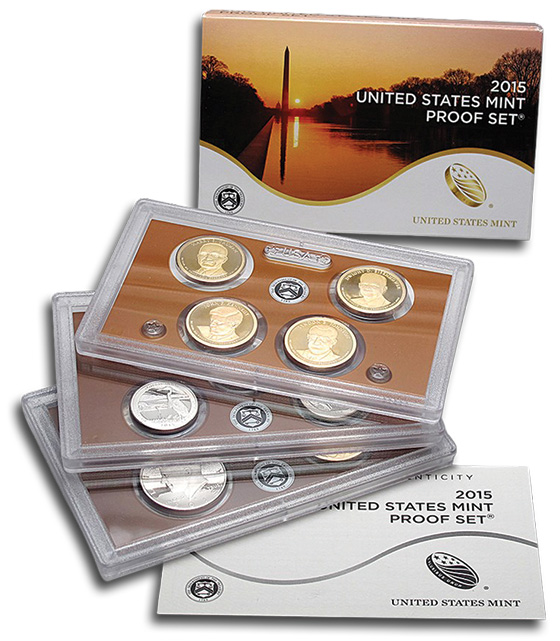
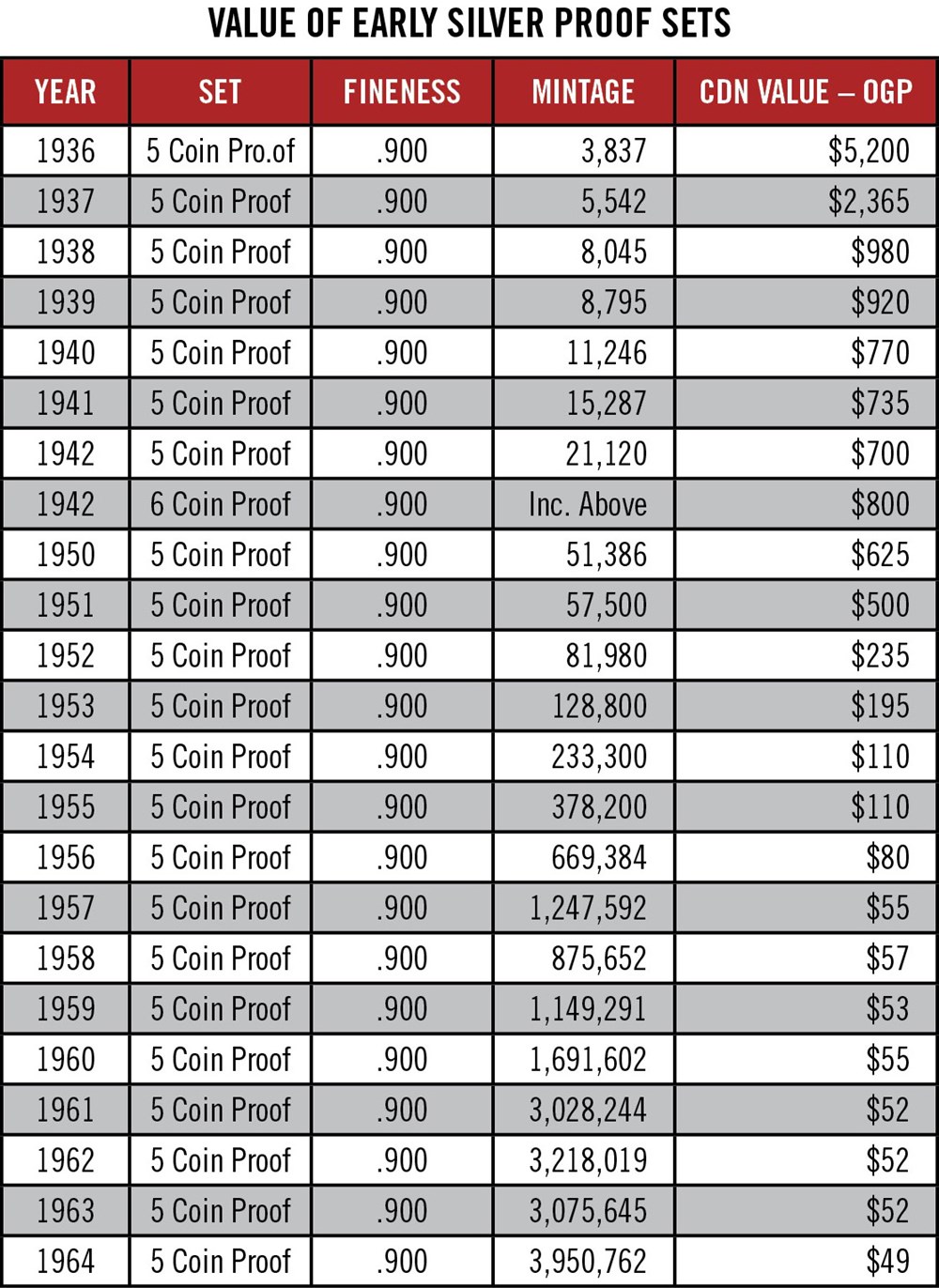
Images courtesy of APMEX, www.APMEX.com.

Related Stories (powered by Greysheet News)
View all news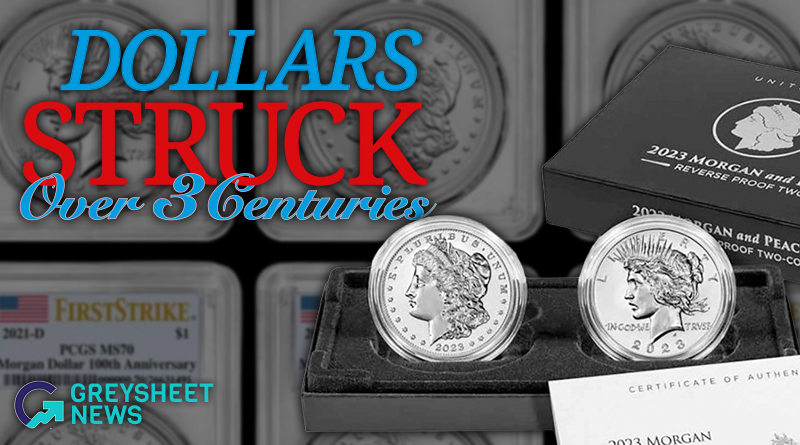
As dealers, collectors and investors all know, Morgan and Peace silver dollars are extremely popular American coins because of their history, legends, and silver content.

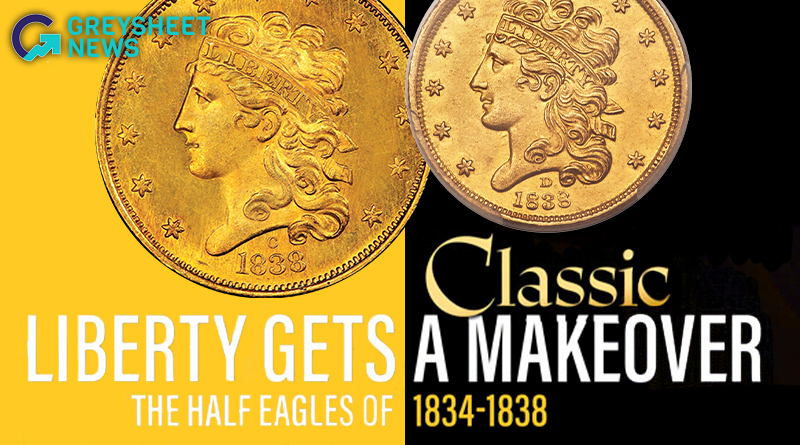
These coins were struck for five years—between 1834 and 1838—and they were struck every year at the Philadelphia Mint.
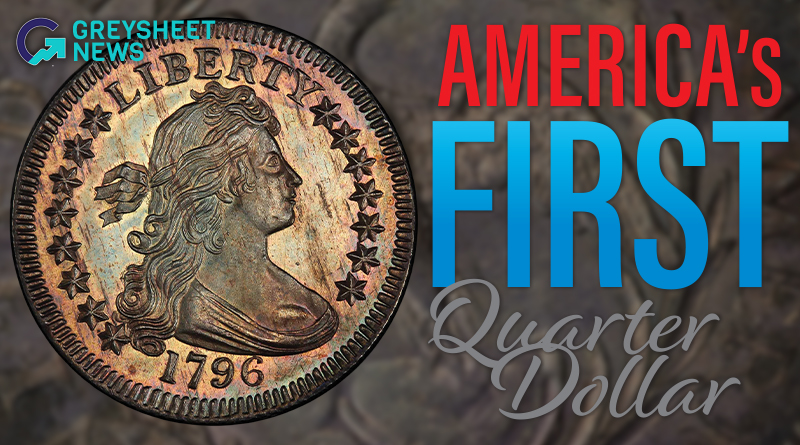
The 1796 Draped Bust quarter dollar is a very important first-year of issue, one-year type coin and the only American quarter struck during the 18th century.
Please sign in or register to leave a comment.
Your identity will be restricted to first name/last initial, or a user ID you create.
Comment
Comments