




 Whitman Expo
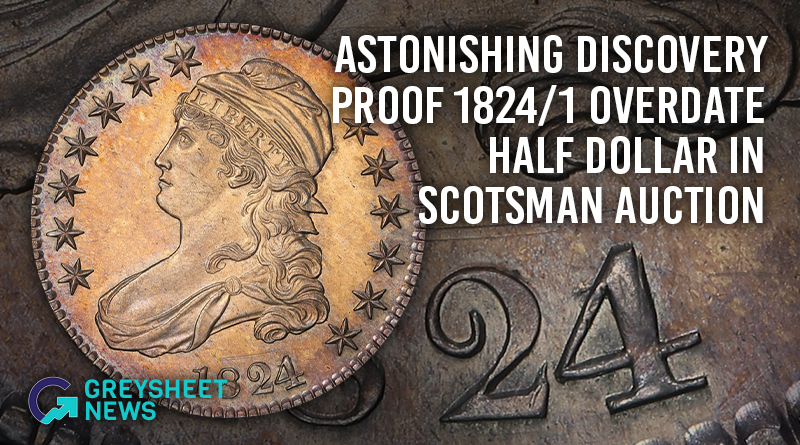
Astonishing Discovery Proof 1824/1 Overdate Half Dollar in Scotsman Auction
First known proof example of Overton 101 variety surprisingly found in consignor’s collection.
by CDN Publishing |
Published on July 15, 2026

Download the Greysheet app for access to pricing, news, events and your subscriptions.
Subscribe to Greysheet for the industry's most respected pricing and to read more articles just like this.
Advertisement
The first known certified proof 1824/1 overdate Capped Bust half dollar is being offered by Scotsman Coin & Jewelry of St. Louis, Missouri, in its Midwest Summer Sale 2026 auction. Bidding begins on July 22 and closes on August 7, 2026 at www.scoins.com.
“This is an astonishing discovery coin,” declared John B. Woodside, Scotsman Vice President.
“This coin is part of the Opa Collection, a large group of rare coins purchased a half century ago by a Midwest collector. His heirs consigned the coins to us ‘raw,’ and we then submitted them to Professional Coin Grading Service. The overdate came back certified PCGS PR63 as an Overton 101 variety with the numeral 4 struck over the 1 in the 1824 date,” Woodside explained.
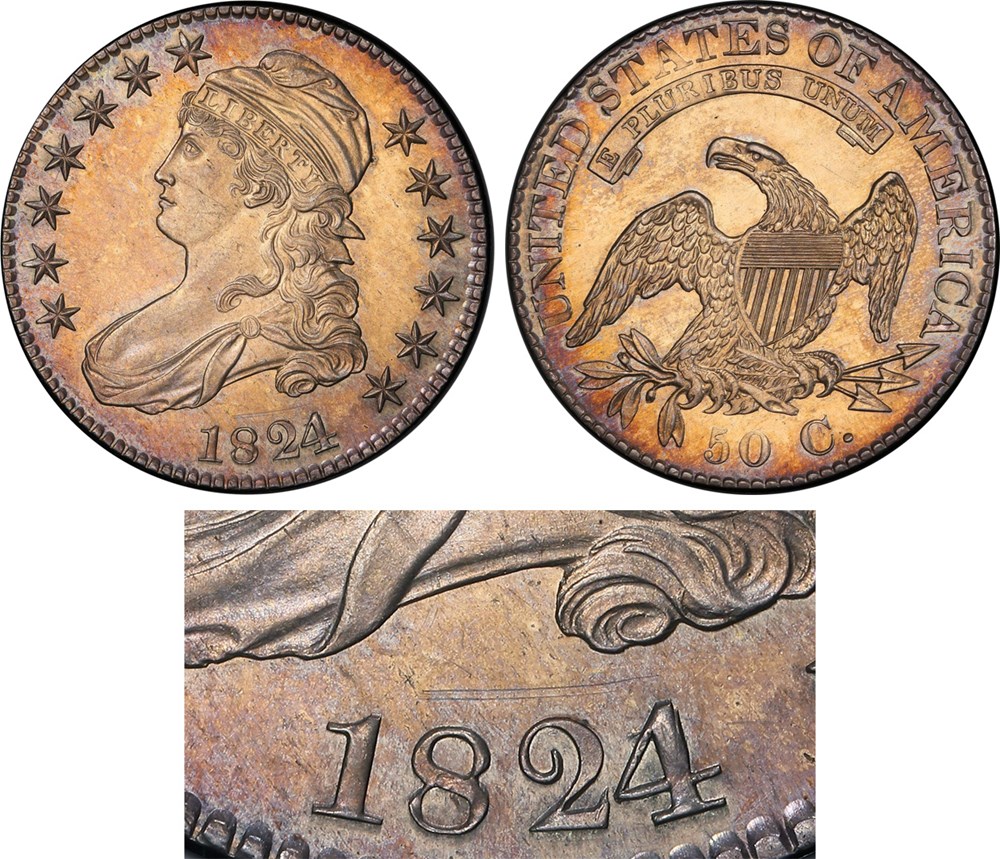
The PCGSCoinFacts.com website estimates there are about 750 circulation strike examples known of the 1824/1 overdate, including several Overton varieties. However, until now, no previous proof example was known to either PCGS or Numismatic Guaranty Company or discussed in any known research literature, according to the Scotsman team.
The proof 1824/1 overdate half dollar originally was acquired by an Ohio collector in 1972, more than a decade before today’s major third-party authentication, grading and encapsulation services began operations.
Although the collector’s heirs want to remain anonymous, they issued a statement: “Our family was deeply honored and humbled to learn that Dad’s 1824/1 proof half dollar had been graded as the finest known example, with no higher-graded specimen currently known. He began collecting coins at the age of 14 and spent his life studying American numismatics, always captivated by the history, artistry, and stories preserved within each coin."
The heir’s statement continued: “Dad recognized that this coin was something extraordinary, but he never had it formally graded. Discovering its significance after his passing has made the moment both remarkable and bittersweet. Whenever he shared a special coin with us, he would smile and say, ‘Look at this beauty.’ Those simple words captured his genuine joy and appreciation for the treasures he spent a lifetime discovering and preserving.”
“This proof coin was made from perfect dies with extreme precision strikes which brought out the most minute, threadlike details in Liberty's hair trailing beneath the edge of the Liberty cap,” stated James Garcia, who wrote the Scotsman auction lot description. Extreme sharpness like this on an open-collar production could only be achieved by multiple strikes.”
“Why would the mint choose to use an overdate obverse die to strike a proof?,” Garcia asked. “We know of preceding examples, of course. And why use dies from three years prior, rather than from 1823, or even 1822? There are precedents at the United States Mint. Proofs exist of the 1824 cent, dime (1824/2), quarter (1824/2), and quarter-eagle (1824/1),” he pointed out.
“Circulation strikes exist for the 1824/2 half-cent. Is the discovery of this new half-dollar a predictor of the existence of a proof half-cent?,” the auction catalog team asked.
The collector’s heirs stated: “We can only imagine how proud and excited Dad would have been to learn the true rarity of this remarkable coin, and knowing Dad, the stories he would have shared about it.”
The conservative pre-auction estimate for the coin is $75,000-$90,000. The auction lot (#725) description of the 1824/1 proof Caped Bust half dollar is online at www.scoins.com/lot.aspx?a=39&l=725. For additional information, contact Scotsman Coin & Jewelry by phone at 314-692-2646 or by email at info@scoins.com.

Related Stories (powered by Greysheet News)
View all news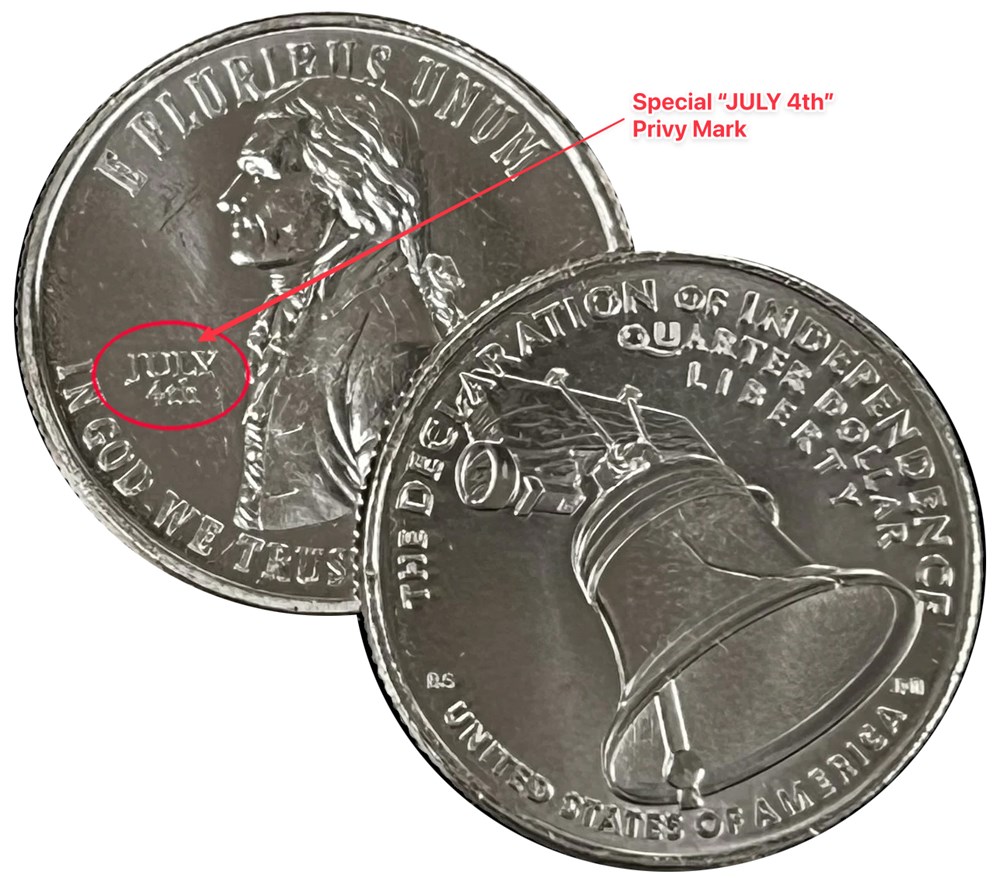
“This is more than a coin; it's a defining moment in our nation's story,” said Mint Director Paul Hollis.


Maryland Governor Wes Moore today signed a bill removing sales taxes from purchases of gold and silver, reversing course after a massive backlash over the past year from the public, precious metals dealers, and sound money experts.
![Greysheet Live at CSNS: John & Patrick Discuss Pricing on the Newman Portal [Video]](https://images.greysheet.com/l/blogs/20260518/771ab3eb-aa48-469e-8bcb-58faae03587c.jpg)
The questions everyone is asking about how pricing is made at the Greysheet.
Please sign in or register to leave a comment.
Your identity will be restricted to first name/last initial, or a user ID you create.
Comment
Comments